
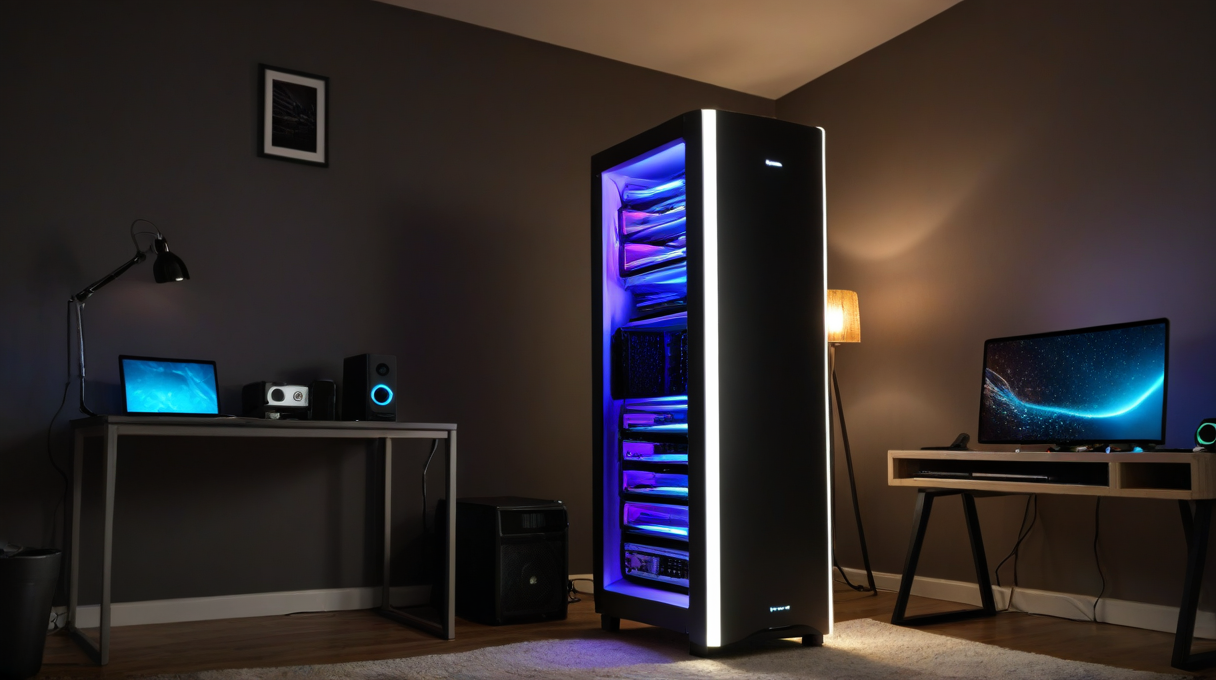
My Unraid server used to sit in the corner of my office doing what NAS boxes do: storing files, running a few containers, being ignored. Now it’s running a small network of AI agents that help me manage three WordPress sites, track family logistics, and keep tabs on my infrastructure. That shift didn’t happen all at once. It started with a question I kept asking myself: why am I paying for cloud AI subscriptions when I have the hardware sitting right here?
The thing I built is called OpenClaw. It’s a self-hosted AI gateway that runs on my local network and connects specialized agents to real tools: web APIs, SSH sessions, email, calendar, WordPress admin. Each agent has a name, a purpose, and a defined scope. Wren handles content and WordPress. Apex handles infrastructure and servers. Juniper is the coordinator who delegates to the others. Fran manages family scheduling. They don’t share a single chat interface; they’re separate processes that can message each other when they need to hand something off.
Before this, I was using ChatGPT for brainstorming, Claude.ai for writing help, and some combination of Google Calendar and mental overhead for everything else. None of those tools talked to each other. I’d get an answer from an AI and then manually do something with it. That gap, between AI output and actual action, was where most of the friction lived.
What surprised me most after getting OpenClaw running wasn’t the capability; it was the reliability of memory. These agents have persistent memory files. Wren knows the plugin list for all three of my WordPress sites, remembers what I’ve published and when, and keeps notes about quirks she’s discovered. That sounds small but it changes how you interact with it. I stopped re-explaining context every session.
The origin of this was frustration more than ambition. I had a homelab that could handle real compute workloads, but I was paying monthly for cloud tools that didn’t know anything about my environment. The local hardware could run models. The models could use tools. The tools could touch my actual systems. Once I saw that chain clearly, the rest followed.
I’m not going to pretend the setup is frictionless. Getting agents connected to real tools in a way that’s safe took real thought. You have to define what each agent is allowed to do, and you have to be honest with yourself about what you’re comfortable automating. I have hard rules in place: no agent publishes content without my approval, no agent runs destructive database commands without confirmation. The guardrails aren’t an afterthought; they’re load-bearing.
The hardware side is more accessible than people expect. I’m running this on Unraid with a GPU I already had for gaming. The local LLM work runs on that GPU. The API calls for tasks that need stronger models go to Anthropic or OpenAI, but those are the exception rather than the rule. Monthly cost has dropped significantly compared to what I was spending on subscriptions before. If you’re not running a full tower, something like the Beelink SER5 Pro mini PC can handle the agent stack fine and draws less power than you’d expect.
I want to write more about each piece of this over the coming weeks: the Unraid setup, the specific agent configurations, the decisions I’d make differently if I were starting from scratch. But the short version is: if you have a decent home server and you’ve been paying for cloud AI tools that don’t know anything about your own infrastructure, it’s worth at least understanding what’s possible on your own hardware.
If you’re running something similar or thinking about it, I\’d like to hear where you landed. Drop a comment below.
Hardware linked in this post:
Affiliate disclosure: Some links in this post are Amazon affiliate links. If you buy through them, I get a small commission at no cost to you. It helps keep the lights on here.
Leave A Comment